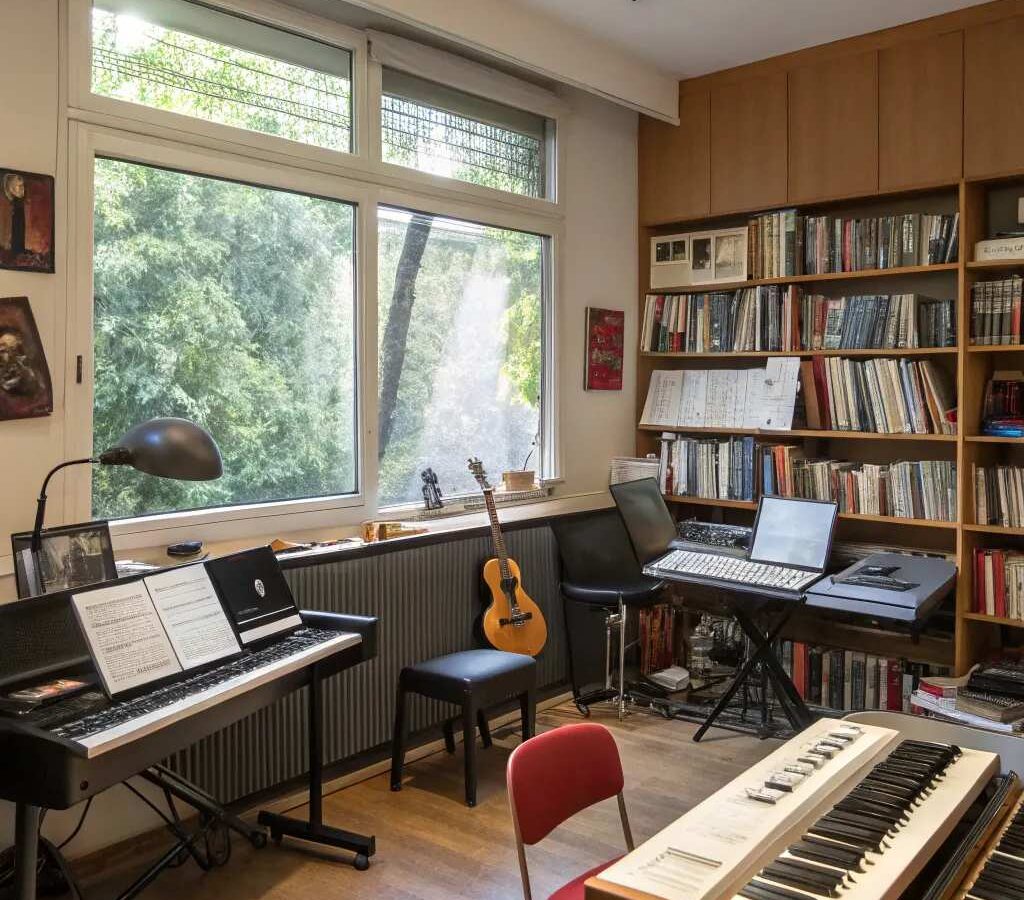
Crafting a dedicated music space is a delicate balance of aesthetics and functionality, requiring each element to blend seamlessly together to create a unified ambiance. For musicians and music lovers alike, establishing a nurturing environment is crucial to foster an enduring passion for the art form.
Designing a Versatile Space for Music and Relaxation
A well-designed music room can serve as a hub for both creative expression and relaxation, providing a productive and rejuvenating environment for music enthusiasts.
Incorporating Nature into the Design
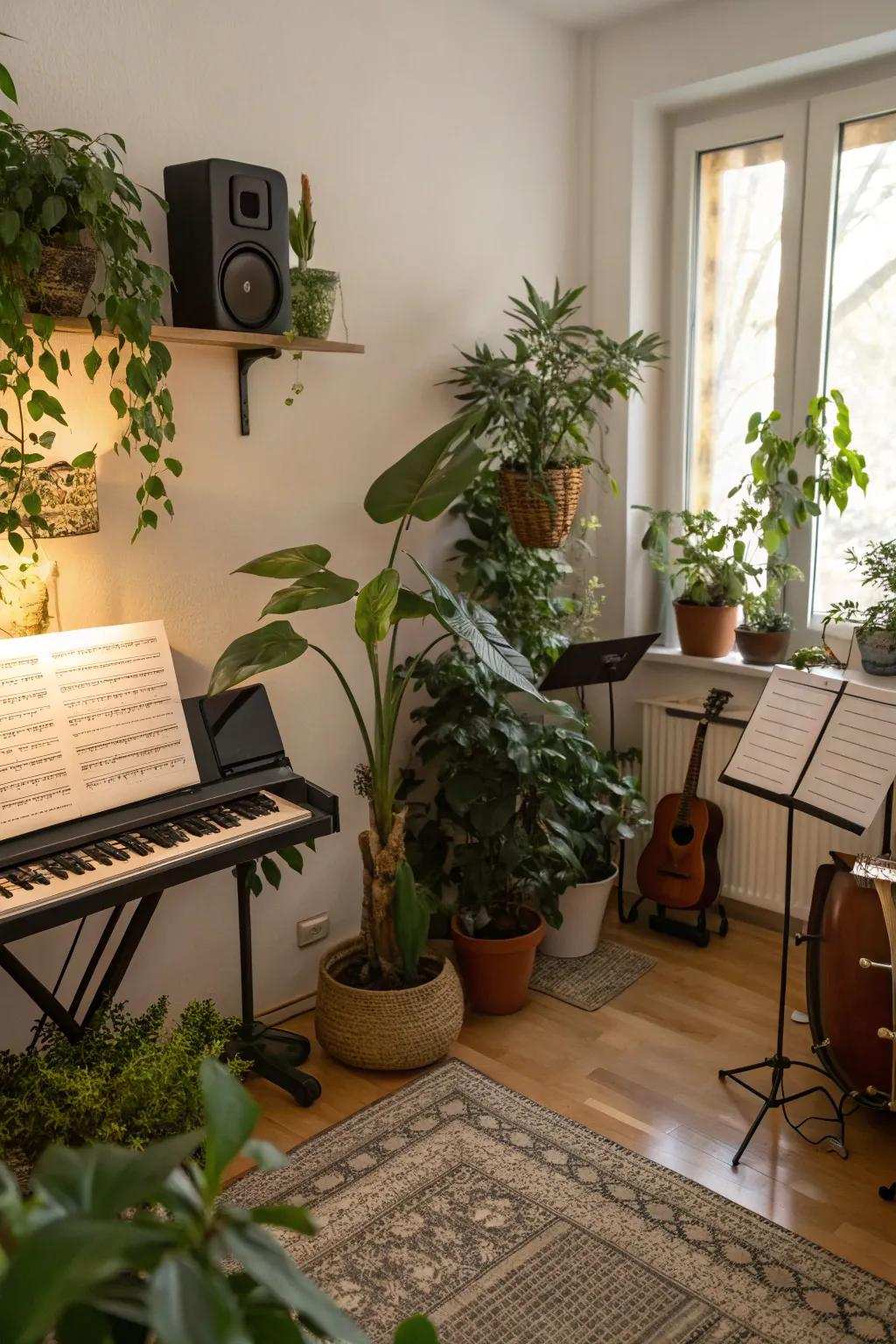
By adding plants to the space, music rooms can benefit from the aesthetic and acoustic advantages they provide. The presence of greenery not only enriches the design but also subtly enhances the sound quality.
Repurposing Old Items as Decor
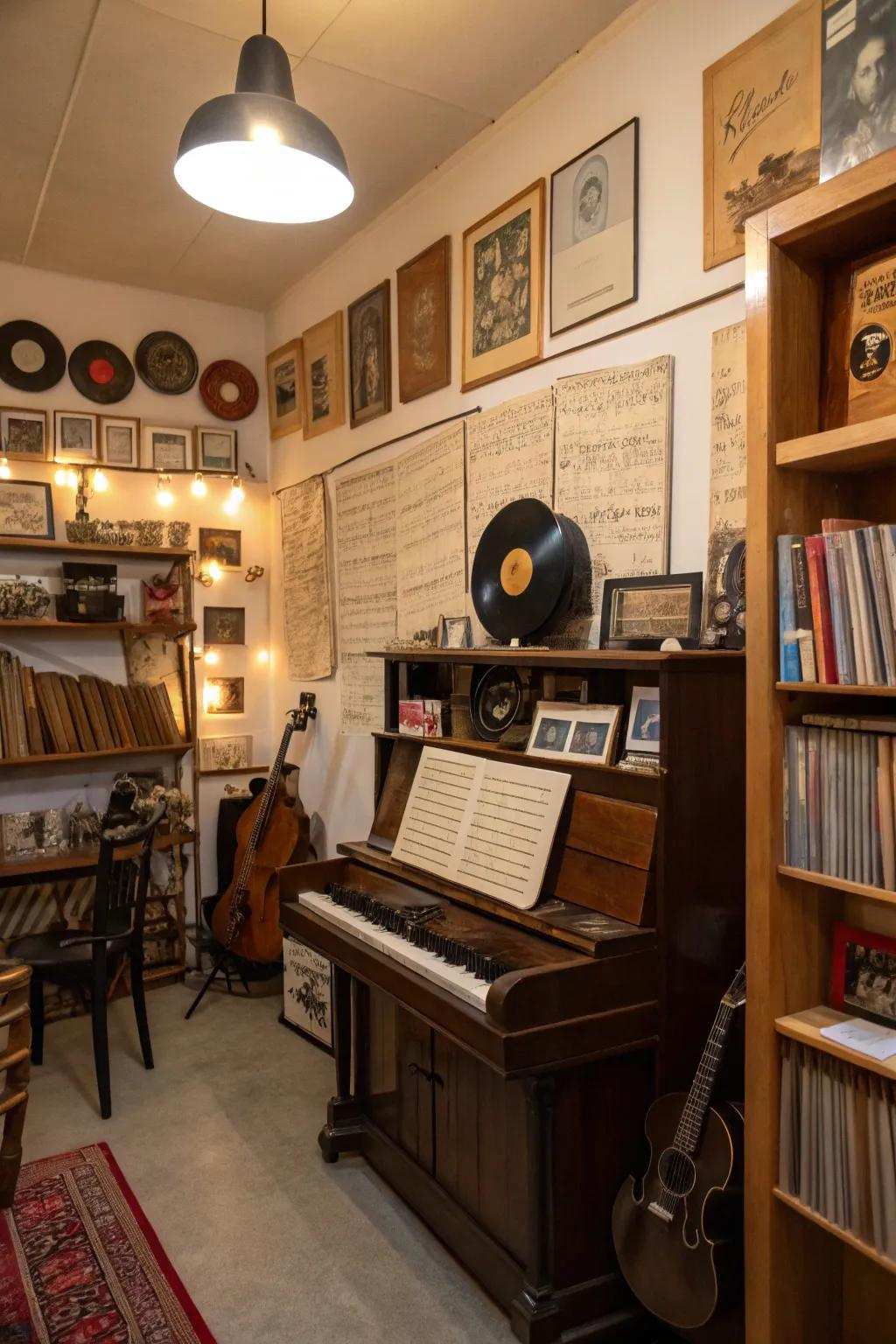
Transforming old items such as vinyl records or musical gear into decorative elements can add a touch of charm to the room. These unique pieces can serve as conversation starters and contribute to the space’s character.
Displaying Instruments as Art
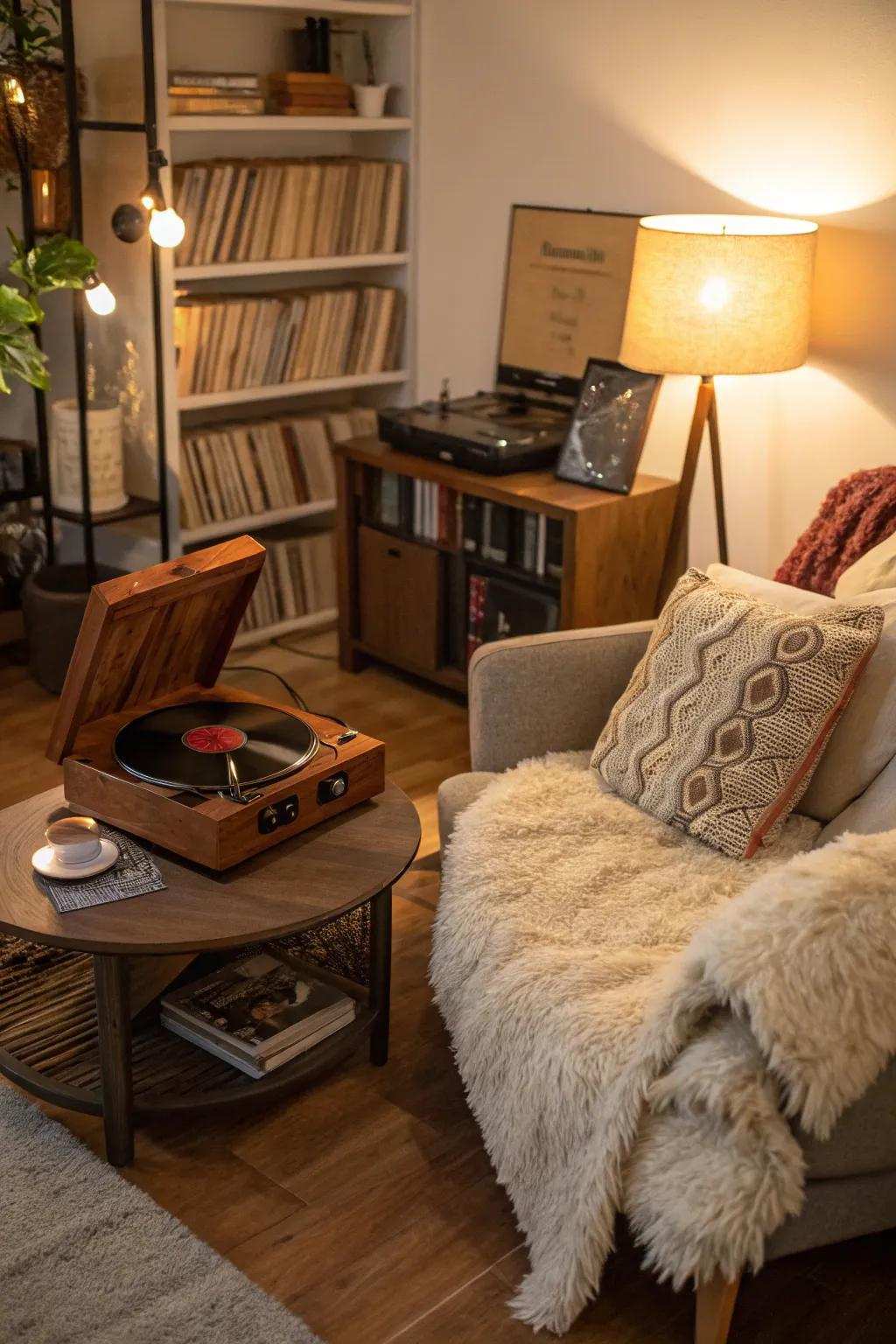
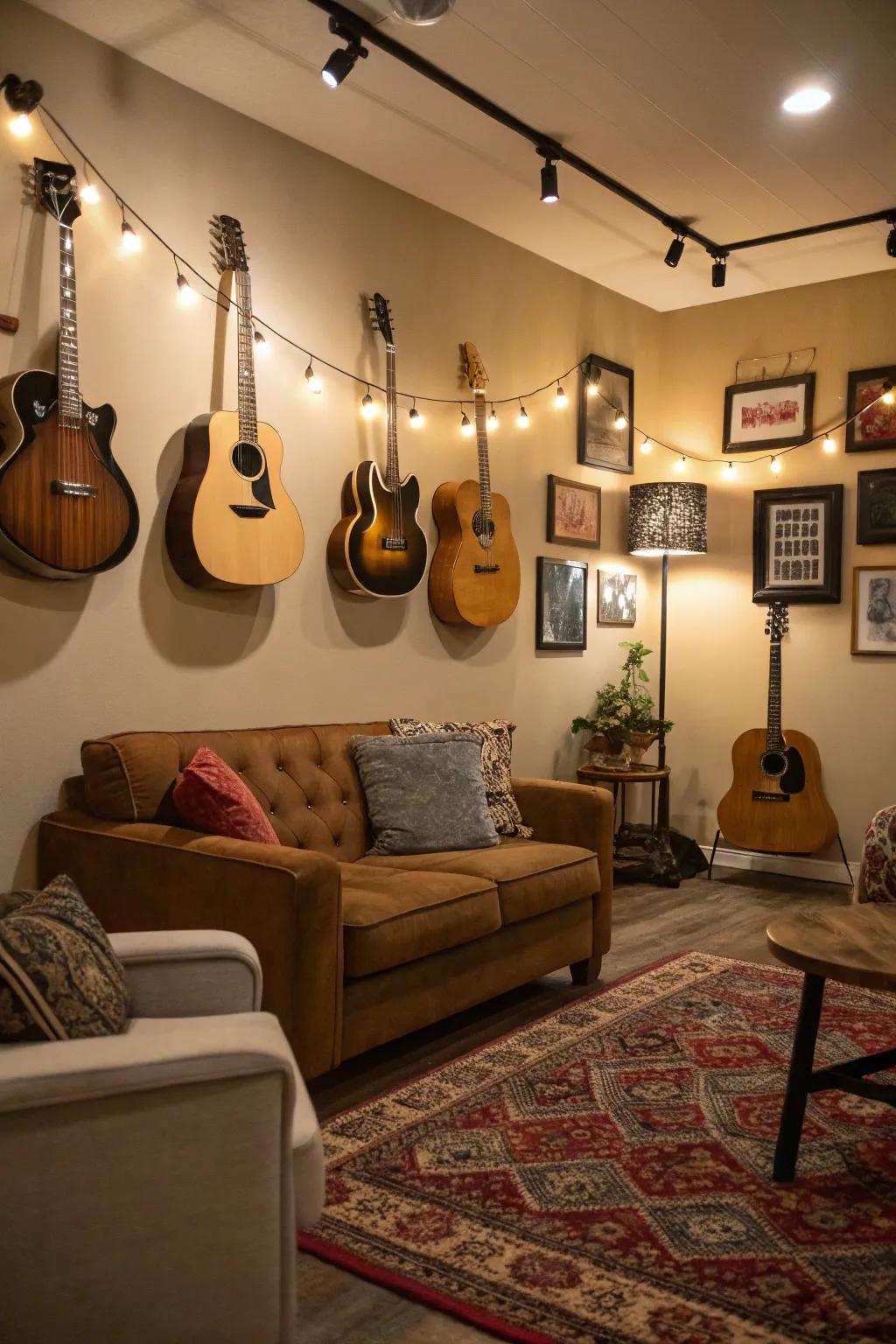
Showcasing musical instruments as wall displays can not only free up valuable space but also inspire creativity whenever entering the room. This approach allows owners to appreciate their instruments as art pieces.
Creating a Cozy Listening Area
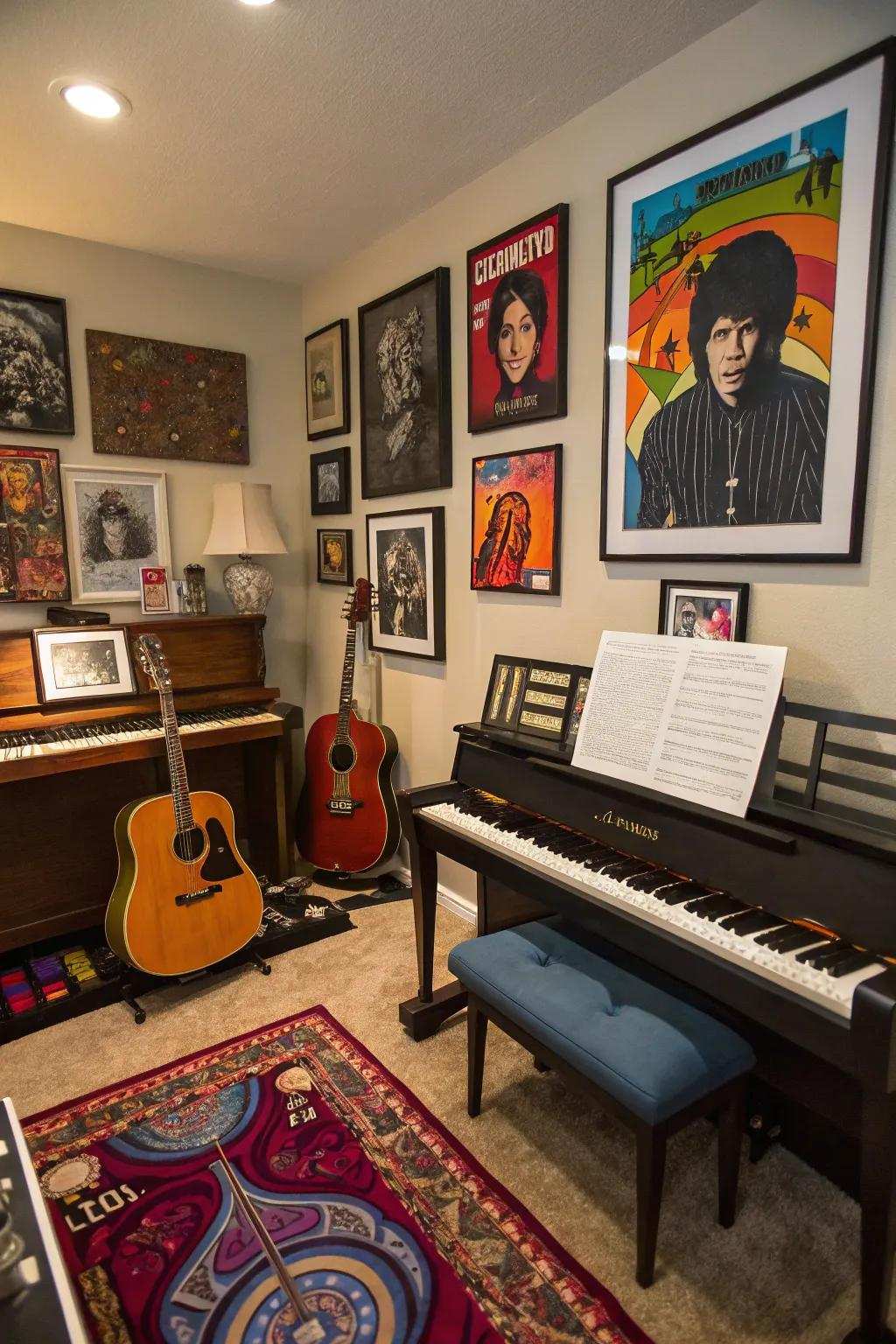
Designating a special spot for listening to music can become a refuge for music enthusiasts, offering a perfect escape from the stresses of everyday life. This area should be designed to promote relaxation and comfort.
Tailoring the Space with Personalized Elements
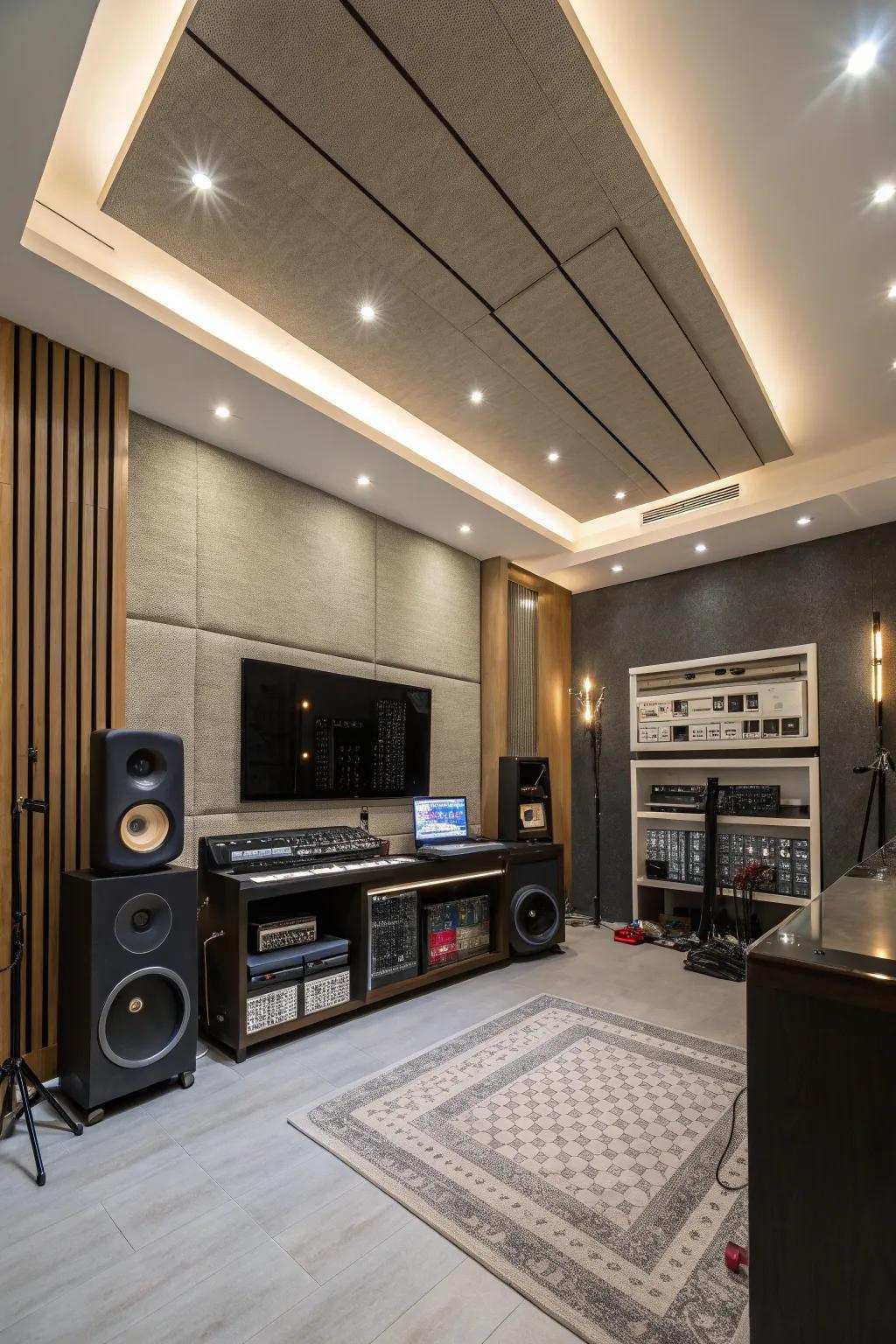
Incorporating art and posters related to music can help personalize the space, making it uniquely reflective of the owner’s musical tastes. This approach ensures that the room feels tailored to the individual’s preferences.
Seamlessly Integrating Equipment
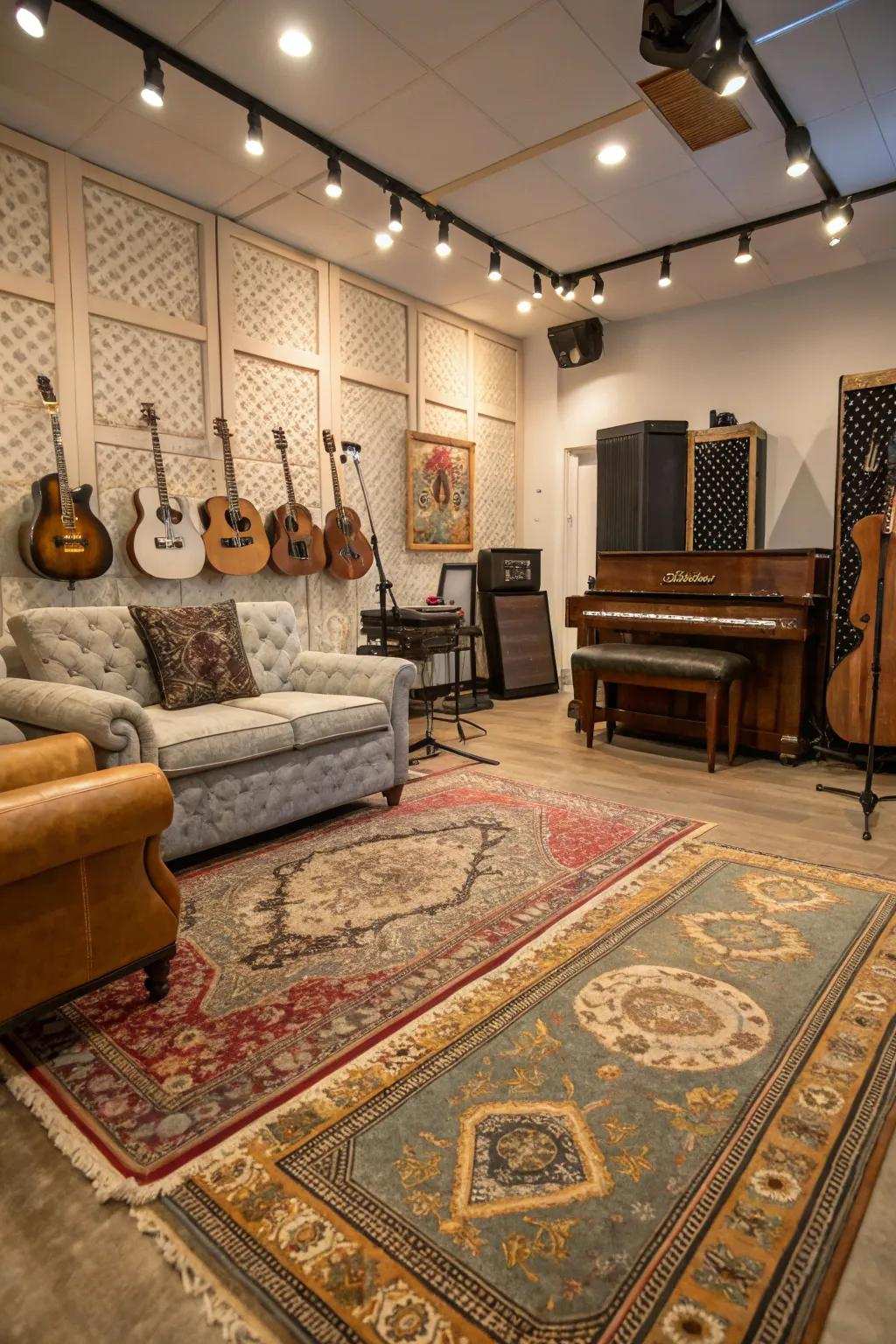
Incorporating technical elements such as speakers and amplifiers into the room’s design can create a cohesive look that complements the space’s overall aesthetic. This approach helps maintain a consistent visual appeal.
Utilizing Rugs for Acoustic and Aesthetic Purposes
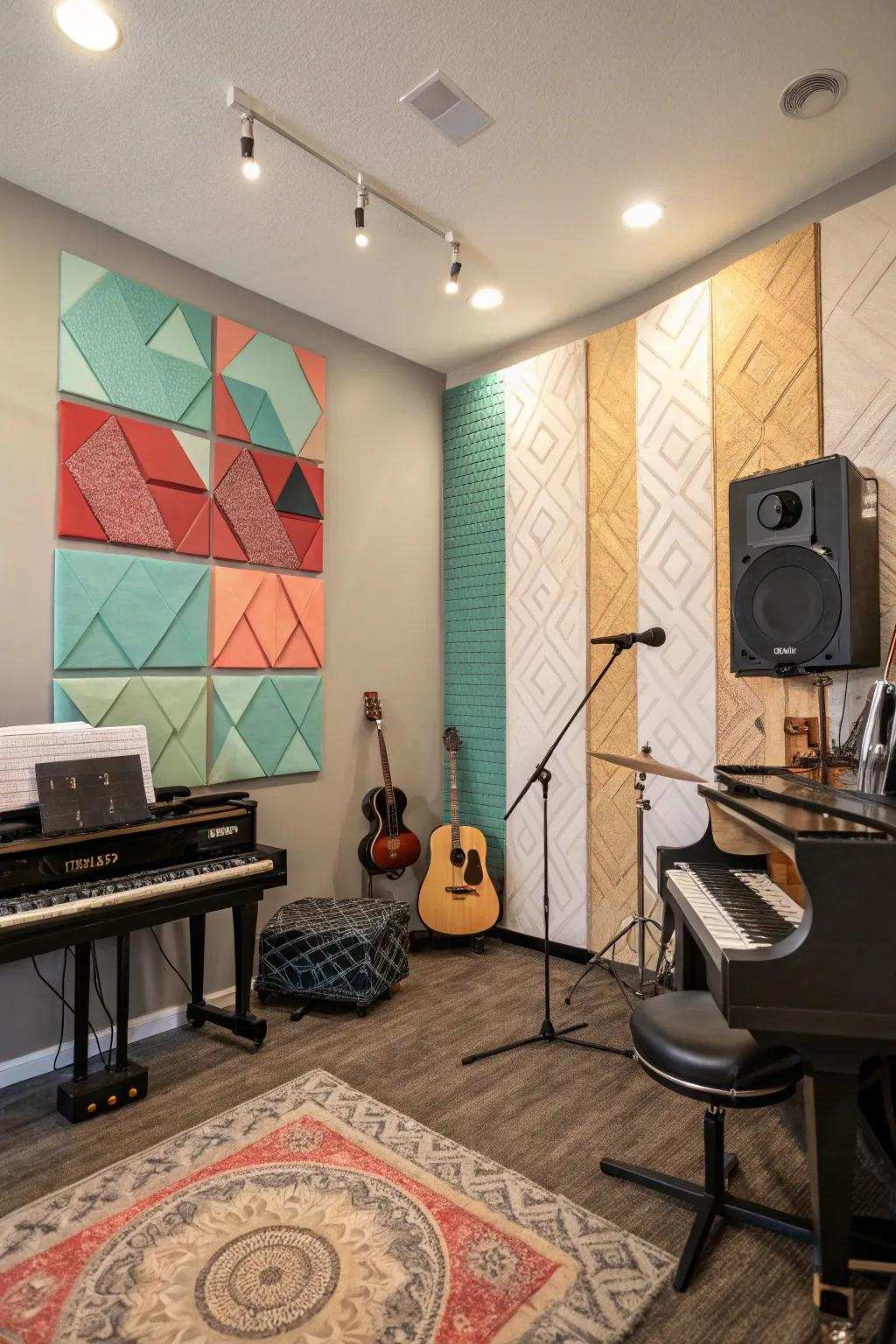
Strategically placing rugs can not only enhance the room’s acoustic properties but also introduce a stylish element. By selecting patterns that complement the existing decor, owners can create a harmonious and visually appealing space.
Employing Sound Boards as Wall Art
Using sound boards as a decorative element can gently improve sound quality while adding a touch of style to the room. This innovative idea can be a great option for those seeking to combine functionality with aesthetics.
Incorporating Comfortable Seating Options
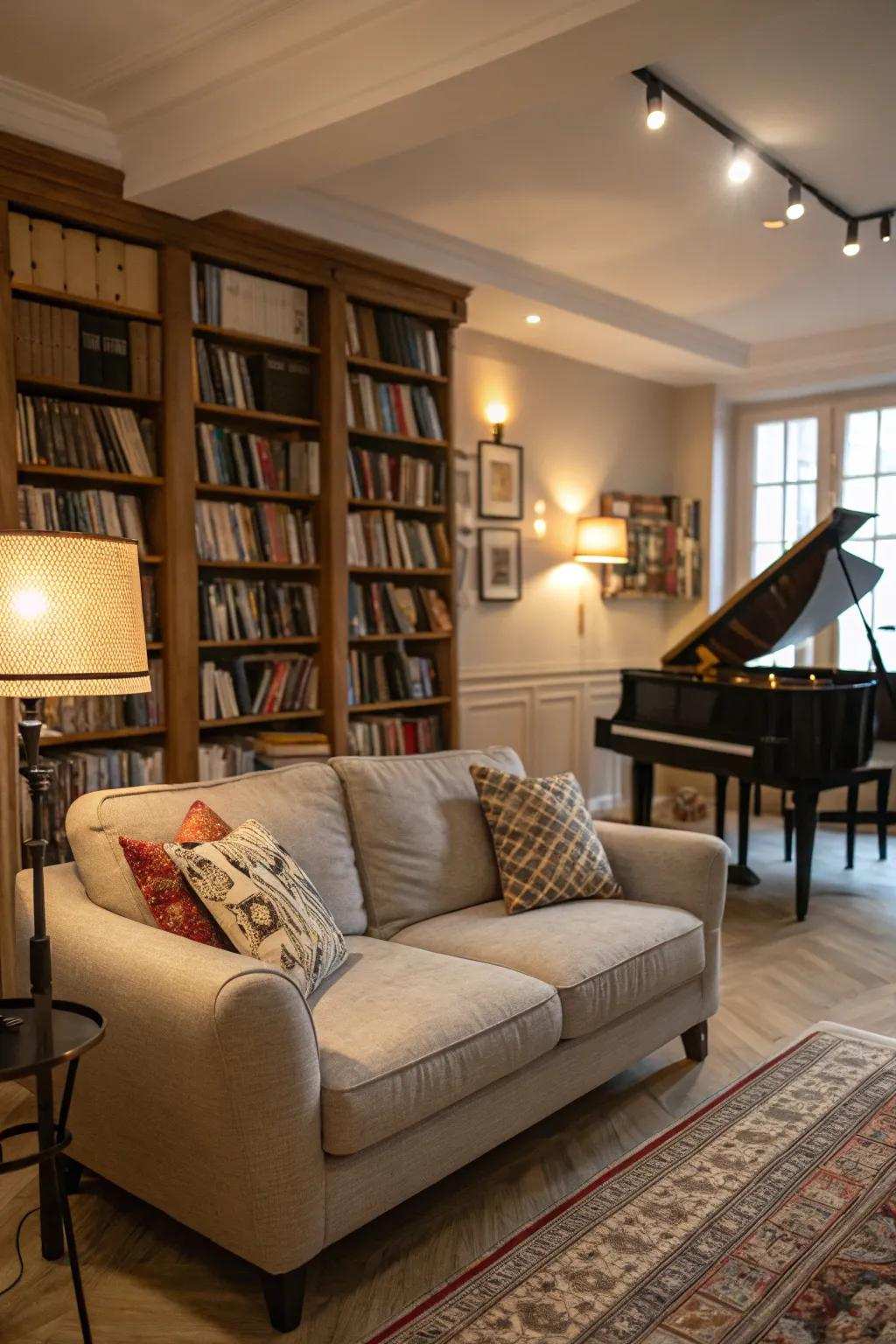
A music room should be designed to promote relaxation, making comfortable seating options a crucial consideration. Soft sofas, plush armchairs, or other inviting seating arrangements can create a welcoming space perfect for listening and creating.
Creating Zones with Divider Screens
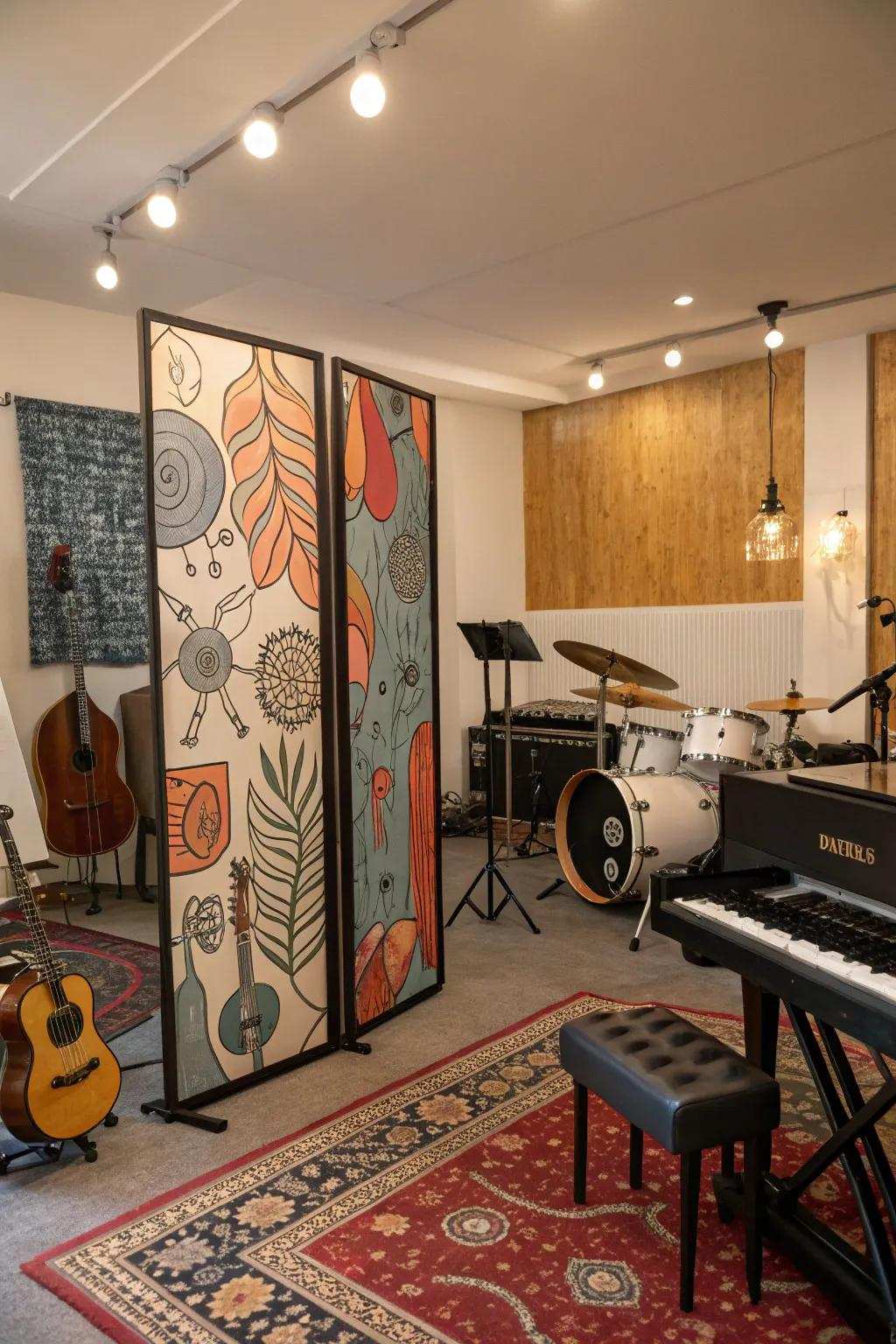
Employing divider screens can help define different areas within the music room, allowing owners to partition the space for various activities. This approach enables the creation of distinct zones, each tailored to specific needs.
Adding a Dramatic Ceiling Feature
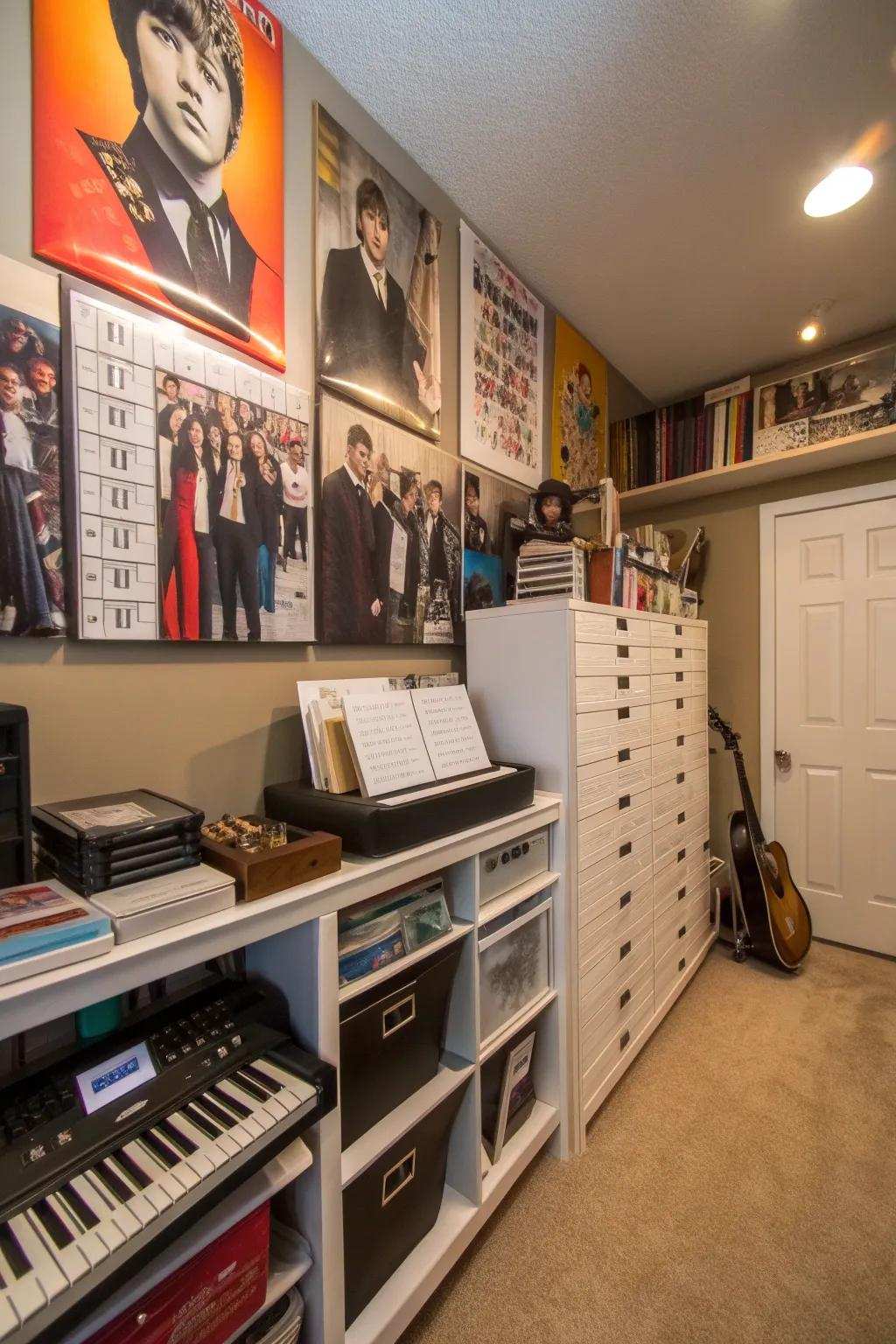
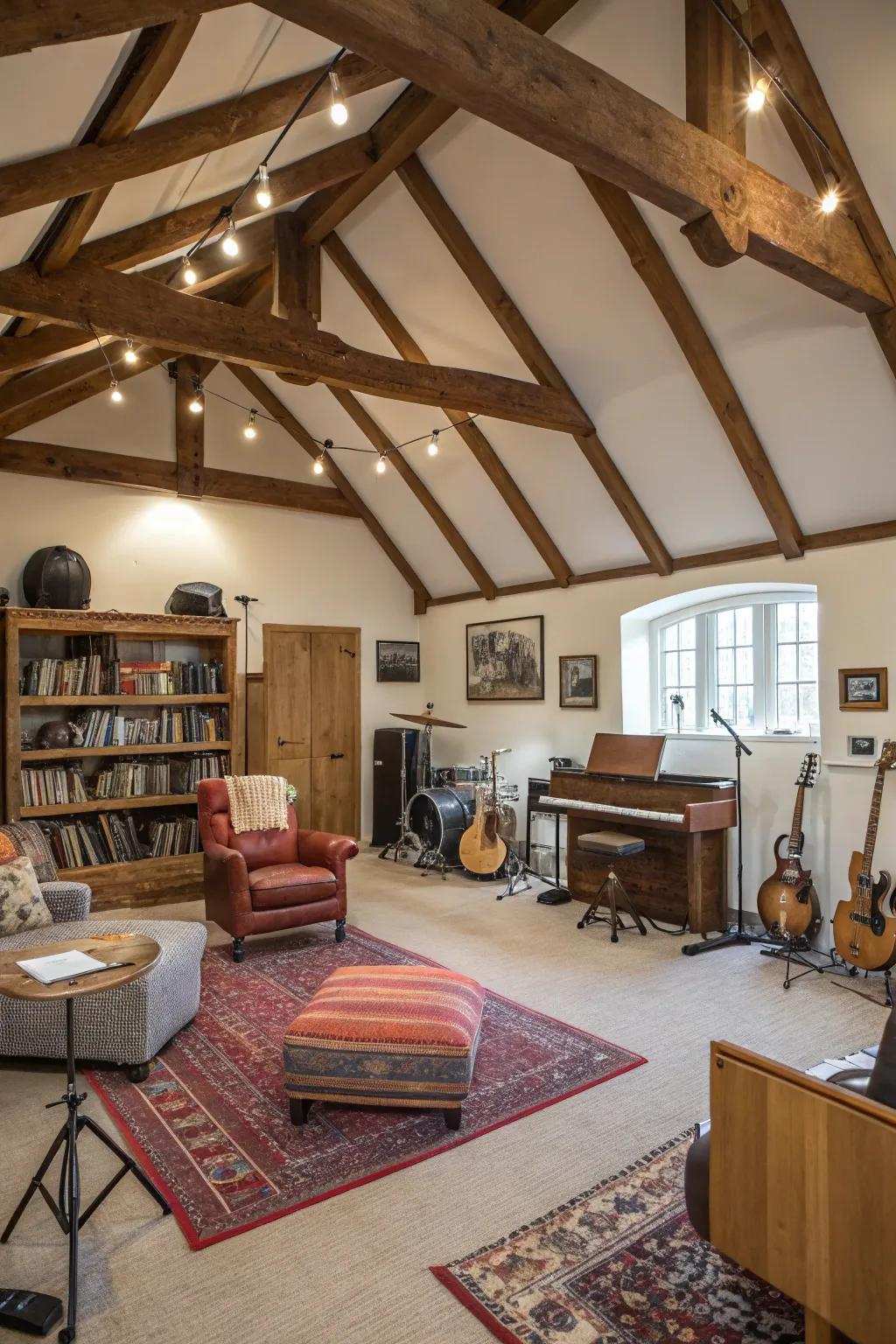
Enhancing the room’s visual appeal by adding a striking ceiling feature, such as a beam or a bold paint color, can draw attention upwards and create a sense of excitement. This design element can also spark conversations and add to the room’s character.
Maximizing Storage with Smart Solutions
Implementing small storage solutions, such as shelves for books and gear, can help keep the room clutter-free while maintaining its aesthetic appeal. Efficient storage solutions are essential for maintaining a functional and organized space.
Incorporating Bold Colors
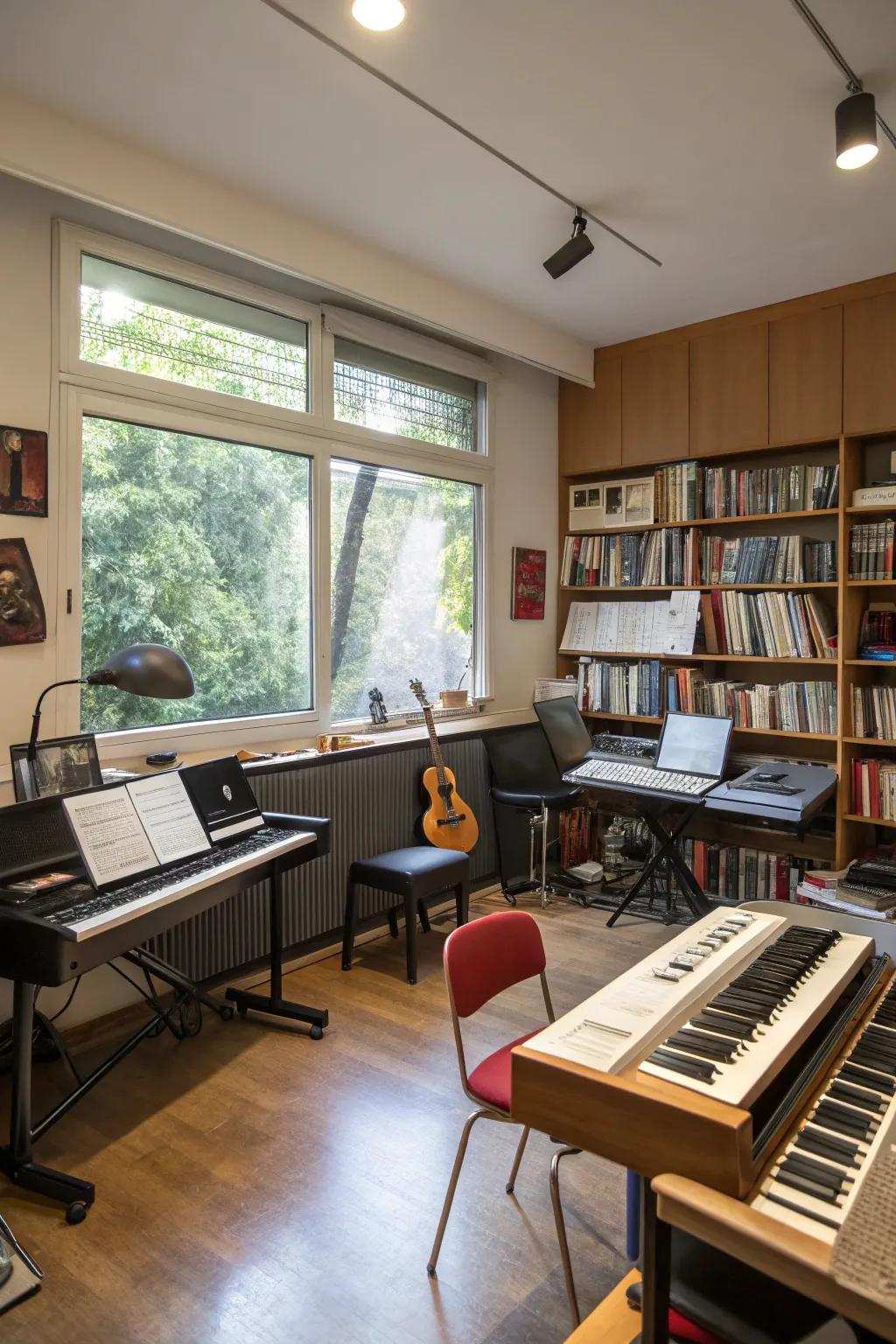
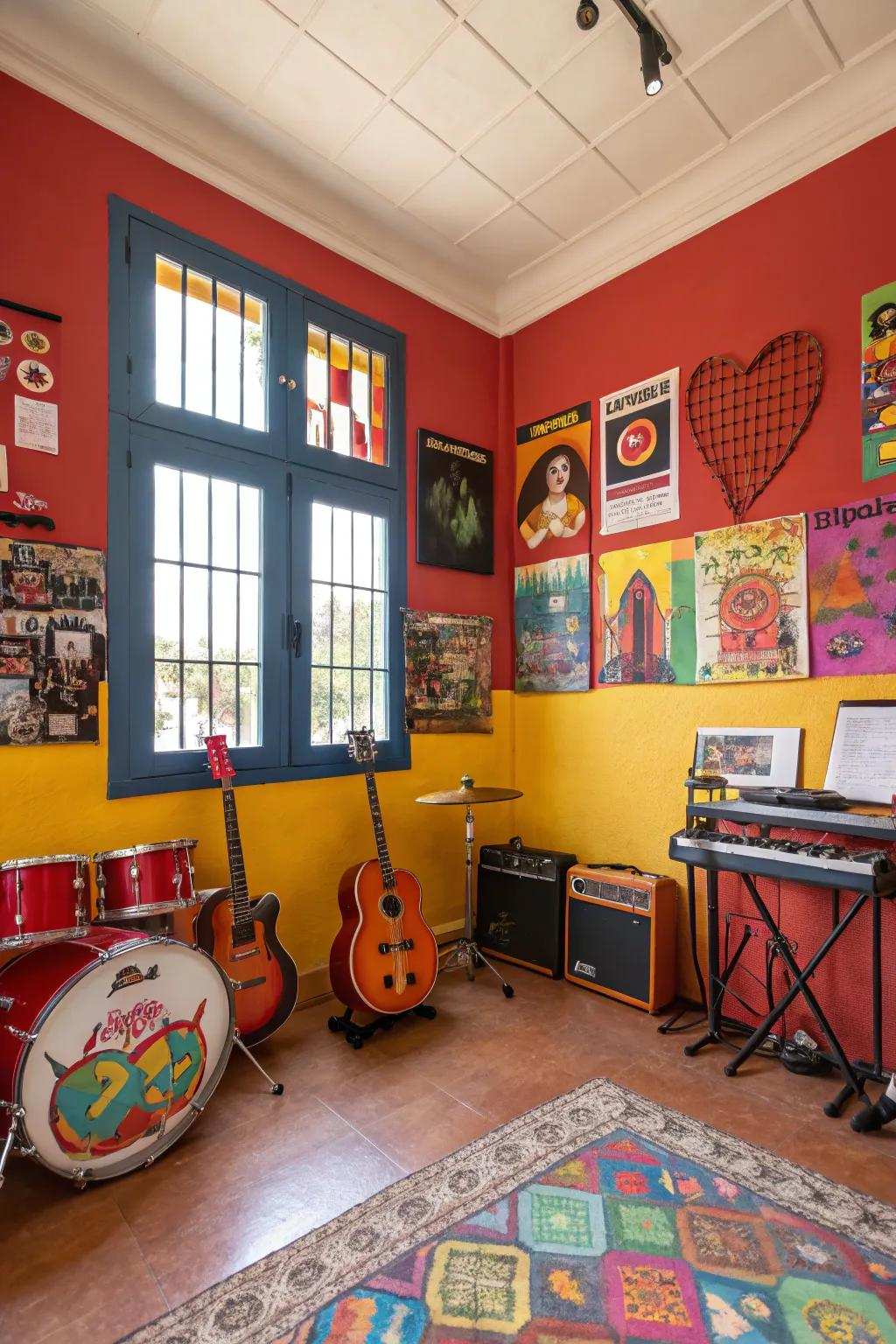
Using striking colors can add a dynamic touch to the music room, boosting creativity and making the space more inviting. Bold colors can also serve as a conversation starter and contribute to the room’s unique personality.
Creating a Productive Workspace
Adding a desk or dedicated space for creating music can help maintain focus and inspire creativity. This area can serve as a hub for musical expression, allowing owners to produce high-quality music in a dedicated environment.